
Quick Answer:
Micro-moments marketing focuses on capturing user intent at the exact moment a need arises. Instead of guiding users through long funnels, it delivers quick, relevant answers that influence immediate decisions. Success depends on speed, clarity, and context. Brands that align content with these short decision windows earn attention, trust, and action, often within seconds.
A quick search before making a choice has become second nature. Whether it’s checking a product, comparing options, or looking for a solution, decisions are no longer delayed; they happen instantly. This shift has quietly redefined how influence works. Instead of long journeys, users move through rapid, intent-driven interactions that shape outcomes in real time.
That’s where understanding what micro moments in marketing are becomes essential.
The Shift from Funnels to Fragments
Traditional funnels assume a linear journey: awareness, consideration, decision. But real behavior rarely follows that path anymore.
Users jump between:
- Search queries
- Short-form content
- Reviews and comparisons
- Quick validations
Each interaction is brief but meaningful. These fragmented touchpoints form decision-making pathways. Recognizing what micro moments in marketing are helps decode how these quick interactions drive outcomes without a structured funnel.
What Defines a Micro-Moment
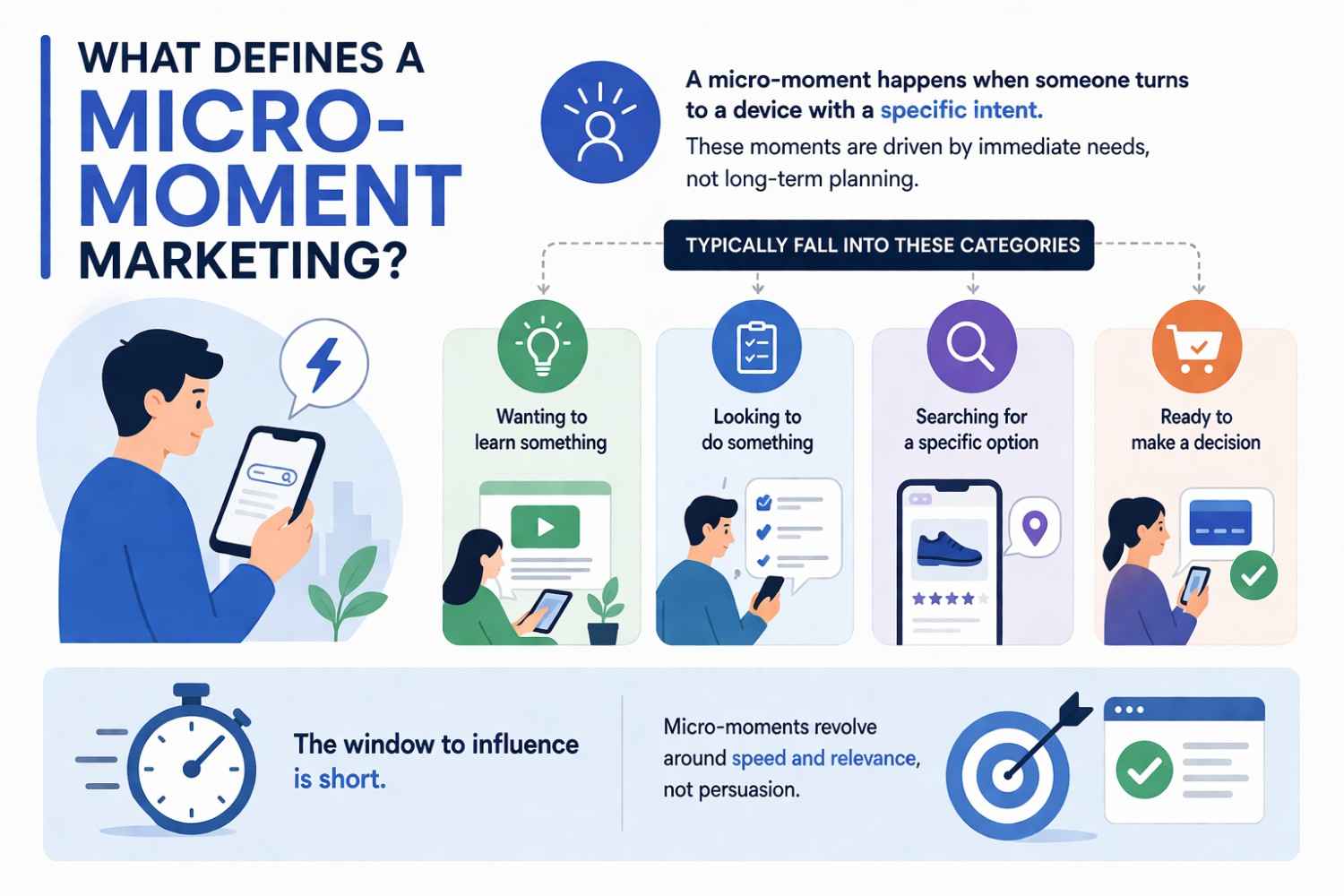
A micro-moment occurs when a user turns to a device with a specific intent. These moments are driven by immediate needs, not long-term planning.
They typically fall into categories:
- Wanting to learn something
- Looking to do something
- Searching for a specific option
- Ready to make a decision
In each case, the window to influence is short. That’s why consumer behavior micro moments revolve around speed and relevance rather than persuasion.
Why Speed Outperforms Persuasion
In fast decision environments, users don’t wait for convincing; they look for clarity. The content that answers quickly wins attention.
Key expectations include:
- Immediate relevance
- Clear, concise information
- Easy navigation
When these elements are present, decisions happen naturally. This is the foundation of an effective instant decision marketing strategy, where value is delivered without delay.
Intent Is the Real Trigger
Every micro-moment begins with intent. The clearer the intent, the shorter the decision cycle.
High-intent signals include:
- Specific search queries
- Direct comparisons
- Problem-focused questions
Content that aligns with these signals performs better because it meets users exactly where they are. This alignment is critical when applying micro moments to real strategies.
Designing Content for Immediate Impact
Content built for micro-moments must prioritize speed without sacrificing clarity.
Effective structures include:
- Direct answers at the beginning
- Short, scannable sections
- Clear subheadings
- Minimal distractions
Users should not need to search within the content to find value. The faster the answer appears, the stronger the impact.
Real-World Content Triggers That Work
Certain types of content naturally perform well in micro-moments because they align with quick decision-making.
Common formats include:
- How-to guides
- Quick comparisons
- Short explanations
- Actionable tips
These formats match user expectations and reduce friction. Studying micro moments examples of marketing reveals that simplicity often outperforms complexity.
Context Shapes the Outcome
Micro-moments are influenced by context, where the user is, what they need, and how urgent the situation feels.
Factors that affect behavior:
- Device type (mobile vs. desktop)
- Time sensitivity
- Environment (on-the-go vs. focused browsing)
Content that adapts to context performs better. This adaptability is a key element in mastering what micro moments in marketing are beyond basic definitions.
The Role of Trust in Fast Decisions
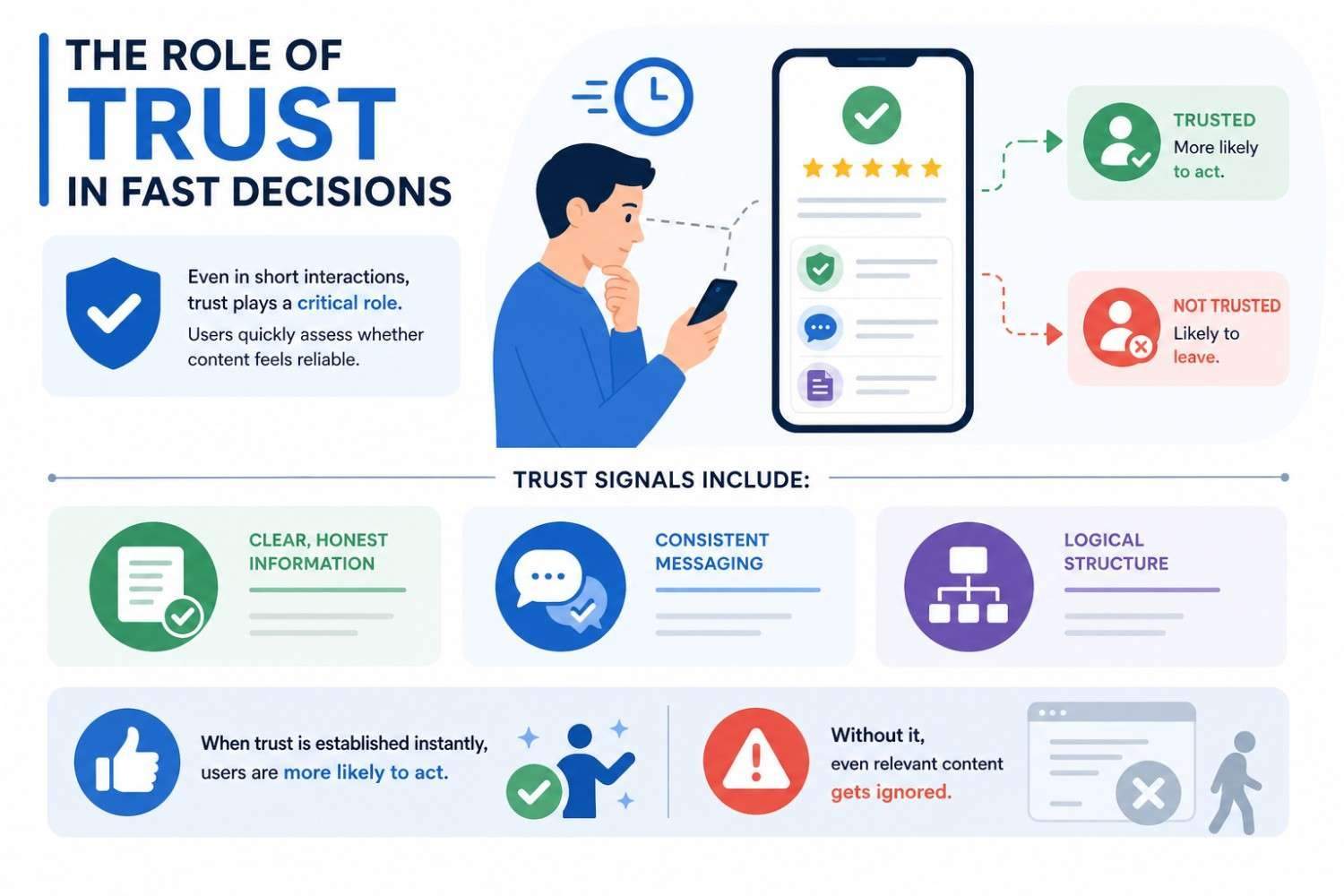
Even in short interactions, trust plays a critical role. Users quickly assess whether content feels reliable.
Trust signals include:
- Clear, honest information
- Consistent messaging
- Logical structure
When trust is established instantly, users are more likely to act. Without it, even relevant content gets ignored.
Reducing Friction to Increase Conversions
Friction slows down decisions. In micro-moments, even small barriers can lead to drop-offs.
To reduce friction:
- Simplify navigation
- Eliminate unnecessary steps
- Keep messaging focused
The goal is to make action feel effortless. This approach enhances performance across micro moments, where ease directly impacts outcomes.
Aligning Content with Search Behavior
Search behavior has become more specific and intent-driven. Users no longer browse; they seek precise answers.
To align with this behavior:
- Use clear, intent-focused language
- Address specific questions directly
- Avoid vague or broad explanations
This alignment ensures that content matches what users are actively looking for, increasing its effectiveness.
Measuring Success in Micro-Moments
Traditional metrics like impressions or clicks don’t fully capture performance in micro-moments.
More meaningful indicators include:
- Time to interaction
- Depth of engagement
- Immediate actions taken
These metrics reflect how well content influences decisions within short timeframes.
Moving Beyond Content to Experience
Micro-moments are not just about content; they are about the entire experience. From the first interaction to the final action, every step should feel seamless.
A strong experience includes:
- Fast loading speed
- Clear design
- Consistent messaging
When all elements align, users move effortlessly from intent to action.
Rethinking Strategy for Instant Decisions
The shift toward micro-moments requires a different approach. Instead of guiding users step by step, the focus shifts to meeting them at critical points.
This involves:
- Anticipating user needs
- Delivering value instantly
- Maintaining relevance across interactions
Those who understand what micro moments in marketing are can design strategies that align with how decisions actually happen.
Where Attention Meets Action
Attention in micro-moments is brief but powerful. It’s not about holding attention for long; it’s about using it effectively.
When content:
- Matches intent
- Delivers value quickly
- Removes friction
It transforms attention into action within seconds.
The future of marketing doesn’t rely on longer funnels. It relies on sharper moments. And those who recognize and optimize for these moments will consistently stay ahead, not by capturing attention longer, but by making it count faster.