

Quick Answer:
Earning attention in a crowded digital space requires relevance, clarity, and genuine value, not manipulation or interruption. People don’t resist content; they resist content that wastes their time. By aligning messaging with intent, reducing friction, and delivering immediate usefulness, brands can naturally attract and retain focus. Sustainable attention comes from trust, not tactics.
Scrolling feels effortless until something interrupts it, not with noise, but with meaning. Most content competes for visibility, yet very little earns genuine focus. This gap defines attention economics: a system where attention is limited, selective, and increasingly difficult to sustain.
The real challenge is no longer visibility. It’s learning how to capture audience attention online without forcing it.
The Shift from Interruption to Permission
For years, digital strategies relied on interruption, ads, pop-ups, and autoplay. These tactics grabbed attention, but rarely held it. The modern audience has adapted, filtering out anything that feels irrelevant within seconds.
Attention now operates on permission. People decide quickly:
- Is this useful?
- Is this worth my time?
- Does this align with what I need right now?
Understanding how to get attention in digital marketing starts with respecting this decision-making process rather than trying to bypass it.
Why Most Content Gets Ignored
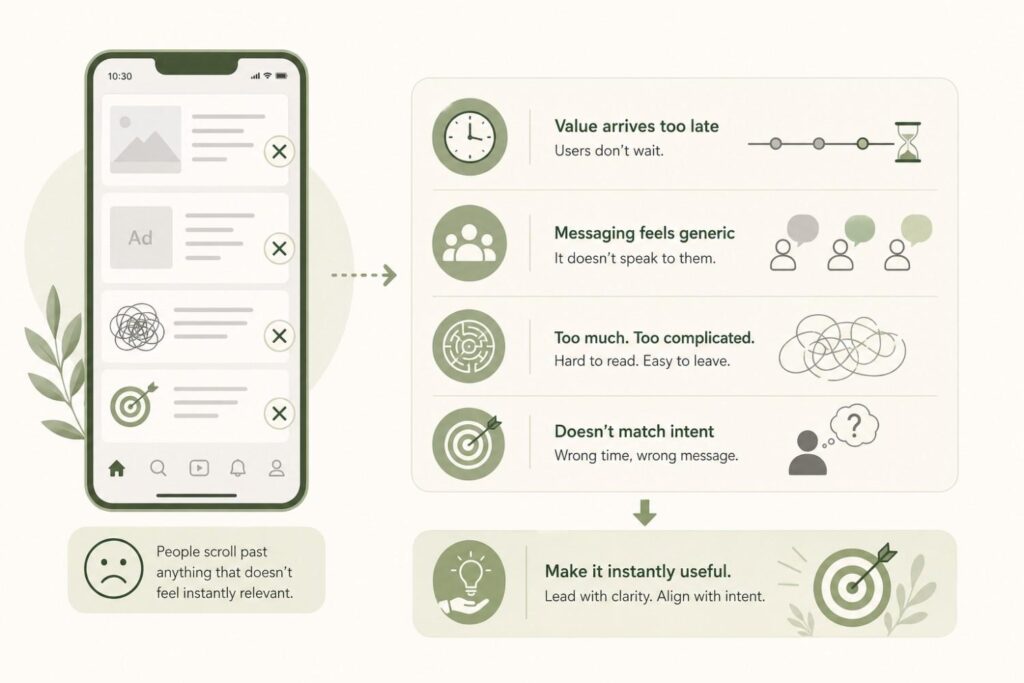
The issue isn’t a lack of content. It’s a lack of precision.
Common reasons content fails:
- Delayed value delivery
- Generic messaging
- Overcomplicated structure
- Misalignment with user intent
When content doesn’t immediately signal relevance, it gets skipped. That’s why mastering how to capture audience attention online requires front-loading clarity, not building up to it.
The First 3 Seconds: Where Attention Is Won or Lost
Attention is fragile. The opening moments determine whether someone continues or exits.
Effective content does three things instantly:
- Communicates clear relevance
- Signals value without ambiguity
- Matches the audience’s current mindset
This is where most creators struggle. Instead of addressing the user’s need directly, they build slow introductions that lose momentum.
To boost performance, focus on improving online content engagement by making the opening instantly useful rather than gradually persuasive.
Context Matters More Than Creativity
Creative content alone doesn’t guarantee attention. Context determines whether that creativity lands.
Consider how attention shifts based on:
- Platform behavior (search vs. social)
- Time of day
- User intent (learning vs. entertainment)
The same content can perform differently depending on when and where it appears. Understanding context transforms how to capture audience attention online from guesswork into a strategy.
Clarity Beats Cleverness Every Time
Clever messaging may impress, but clarity converts attention into action. When users have to decode meaning, they disengage.
High-performing content:
- Uses simple, direct language
- Avoids unnecessary complexity
- Prioritizes understanding over creativity
In attention economics, clarity reduces cognitive load. This is a key principle in attention span marketing strategies, where simplicity allows faster processing and deeper retention.
The Role of Relevance in Sustaining Attention
Capturing attention is only the first step. Keeping it requires alignment with the user’s expectations.
Content that sustains focus:
- Delivers on the promise made in the opening
- Maintains logical flow
- Avoids unnecessary detours
When relevance drops, attention drops with it. That’s why consistent alignment is essential when applying how to get attention in digital marketing effectively.
Designing Content for Scanning Behavior
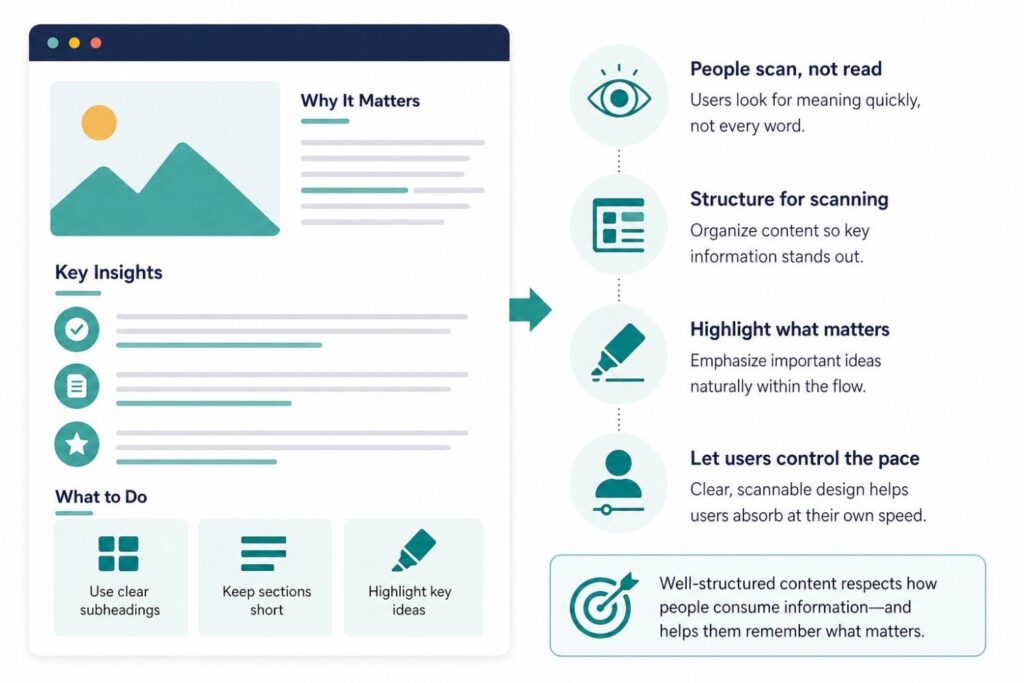
Most users don’t read; they scan. This behavior shapes how content should be structured.
To match this pattern:
- Use clear subheadings
- Break content into short, digestible sections
- Highlight key ideas naturally
Scanning-friendly design increases retention because it allows users to control their pace. This structural clarity supports how to capture audience attention online without forcing engagement.
Emotional Triggers Without Manipulation
Emotion plays a role in attention, but forced emotional hooks often feel artificial. Authentic relevance creates stronger engagement than exaggerated storytelling.
Effective emotional triggers include:
- Relatability
- Curiosity
- Practical usefulness
Instead of amplifying emotion, align it with real user needs. This approach strengthens how to capture audience attention online while maintaining trust.
Reducing Friction to Keep Users Engaged
Every extra step, confusing sentence, or unclear idea adds friction. Friction breaks attention.
To reduce it:
- Keep navigation intuitive
- Eliminate unnecessary details
- Maintain a smooth flow between sections
Attention thrives in environments where effort is minimal. Removing friction ensures that once attention is earned, it isn’t lost.
The Difference Between Visibility and Value
Visibility gets clicks. Value keeps attention.
Content that focuses only on reach often sacrifices depth. But depth is what builds lasting engagement.
To shift from visibility to value:
- Prioritize usefulness over volume
- Focus on solving specific problems
- Avoid overproducing low-impact content
This distinction defines long-term success in attention economics.
Building Trust as the Ultimate Attention Strategy
Trust is the most sustainable form of attention. When users trust the source, they return without needing to be convinced again.
Trust is built through:
- Consistency in quality
- Honest communication
- Delivering real value without exaggeration
Over time, this reduces the effort required to gain attention because it becomes expected rather than earned repeatedly.
Turning Attention into Meaningful Engagement
Attention alone is not the goal. The real objective is meaningful interaction—where users stay, engage, and act.
This happens when:
- Content aligns with intent
- Value is delivered quickly
- The experience feels seamless
When these elements come together, attention transforms into engagement, and engagement into growth.
Rethinking How Attention Is Earned
The digital space is not lacking content; it’s lacking intention. Competing for attention through noise leads to short-term gains but long-term disengagement.
A more effective approach focuses on:
- Precision over volume
- Clarity over complexity
- Value over visibility
Those who learn how to capture audience attention online without forcing it will consistently outperform those who rely on interruption.
Attention is no longer something to take. It’s something to deserve, and once earned, it becomes the most valuable asset in digital growth.